
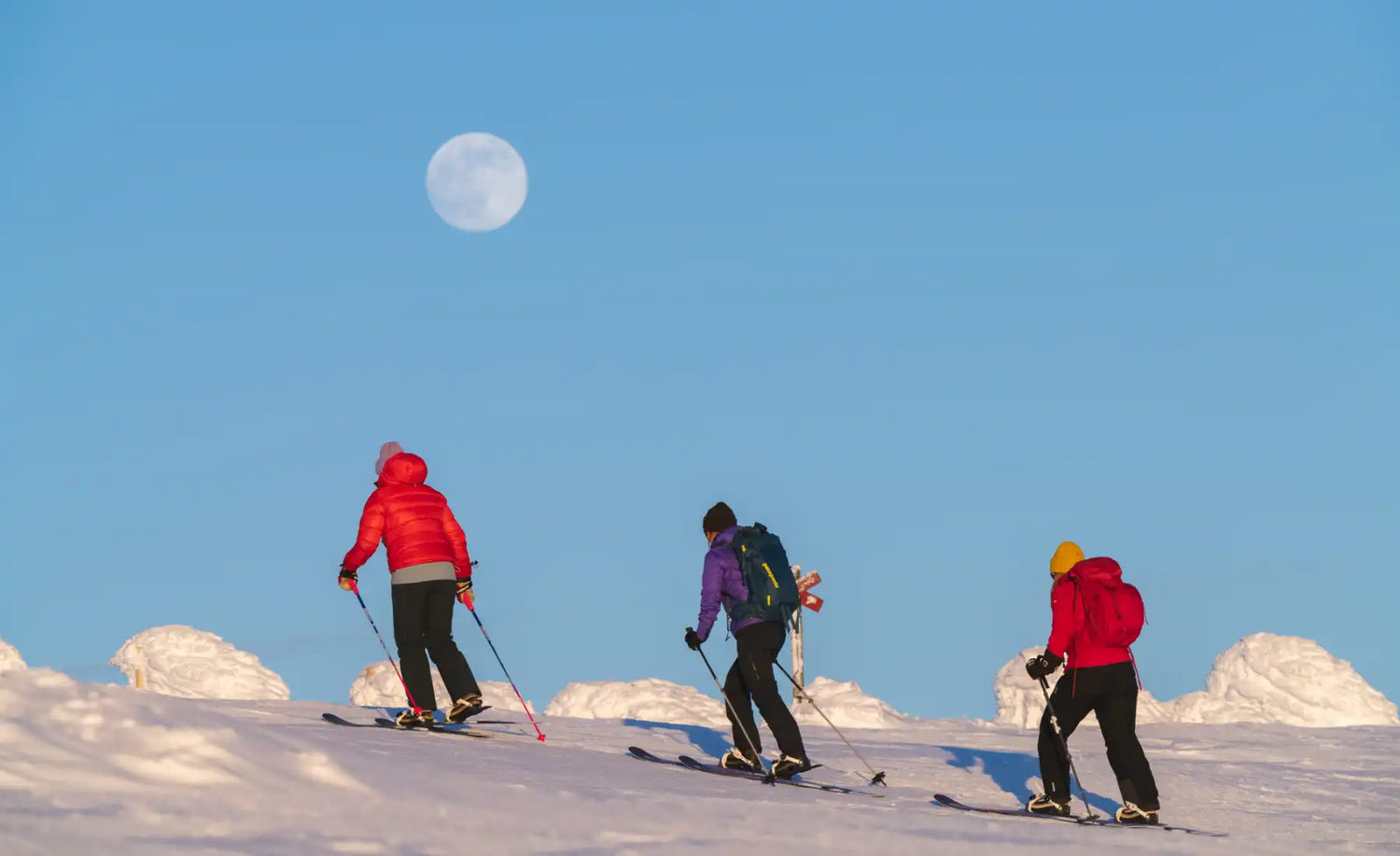
Skinbased skiing offers a peaceful way to explore snowy landscapes far from crowded resorts. It also requires you to be prepared for a full day out in the cold. In this blog we cover some strategies to do just that.
Here’s how to keep yourself warm, dry, and happy on your next cold-day tour.

1. Master the Art of Layering
Layering is your most important tool. Unlike resort skiing, Skinbased skiing often involves periods of steady uphill or cross-country movement, where overdressing can quickly mean overheating. Being smart about your layers will allow you to adjust quickly.
Your essential layers:
-
Base Layer: Moisture-wicking (merino wool or synthetic). Avoid cotton—it holds sweat, which can cause chills.
-
Mid-Layer: Fleece or lightweight insulated jacket for warmth.
-
Shell Layer: Windproof, snow-resistant, breathable jacket. This is what keeps the elements out.
- Insulation Layer: A puffy jacket that can go over all other layers for use when taking breaks.
Pro tip: Start off just a bit cool. If you’re warm and comfy at the trailhead, chances are you’ll be too hot five minutes into your ski.
2. Regulate Your Temperature Early and Often
Temperature control is dynamic. Don’t wait until you’re drenched in sweat before unzipping or removing a layer.
-
Open pit zips as soon as you feel warm.
-
Remove a hat or buff to quickly shed heat.
-
Take off a mid-layer before you begin a long climb.
-
Put layers back on immediately at breaks or transitions to avoid getting chilled.
Being proactive with heat management prevents sweat from accumulating—your biggest enemy on cold days.
3. Protect Your Extremities
Cold fingers and toes can kill good vibes fast. Since your circulatory system prioritizes your core, your extremities feel the cold first.
Hands
-
Wear a liner glove for uphill and cross-country movements.
-
Keep a warmer, insulated glove or mitten in your pack for descents or windy areas.
-
Bring hand warmers for emergency warmth.
Feet
-
Choose moisture-wicking socks (again—no cotton!).
-
Avoid overly thick socks, which can reduce circulation.
-
Keep an extra dry pair of socks in your pack.
Head & Neck
-
A lightweight hat or buff is perfect for more active moments.
-
A thicker beanie or hood comes out for rest stops and windy spots.

4. Don’t Forget About Food and Water
Cold makes you forget you’re thirsty, but your body needs fluids to stay warm and energized.
-
Drink water or your favorite warm drink regularly.
-
Pack calorie-dense foods.
-
Use an insulated bottle or thermos to prevent freezing.
Staying fueled helps your body maintain heat on long days.
6. Pack Additional Layers
A wrong turn or injury can turn even a mellow tour into a long day out.
Keep in your pack:
-
Emergency blanket or bivy sack
-
An extra compact down/puffy jacket
-
Extra pair of gloves and hat
7. Plan Before You Go
Staying warm is also about knowing what’s coming and having a good plan.
-
Check weather forecasts including wind speeds and directions.
-
Avoid long breaks in exposed areas.
-
Note any nearby shelters and exit points.
Staying warm on cold days comes down to smart preparation and constant temperature management. With the right system in place, you’ll be able to enjoy the quiet forests, open ridges, and untouched snow without the cold hindering you.

0 kommentarer